Wine and Flowers: Pairing for the Senses
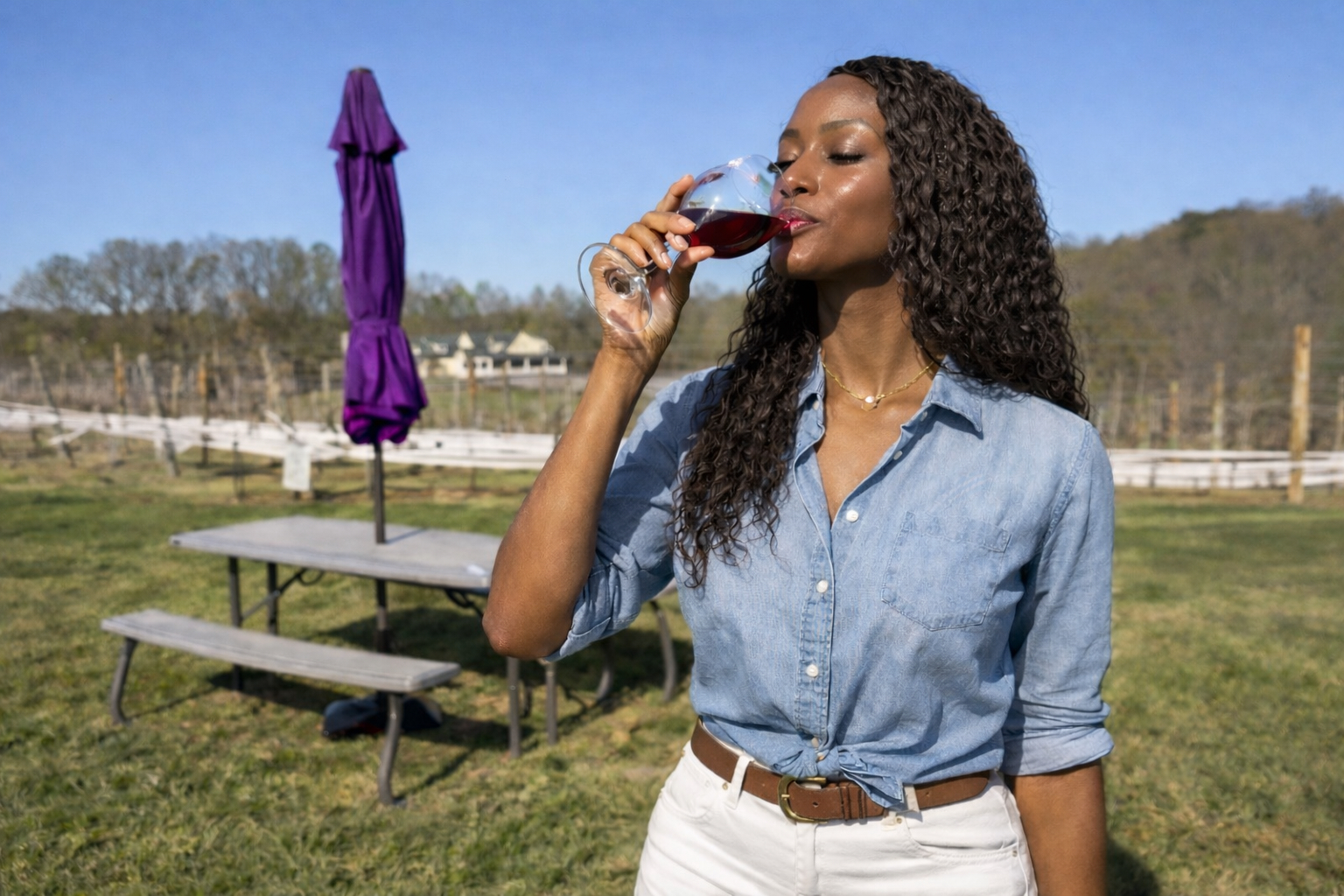
The Glass and the Arrangement
It was an ordinary evening. The light was coming in low through the window the way it does in the late afternoon, landing on the table in a way that made everything on it look
considered. There was a candle nearby. A glass of wine. And a small arrangement of flowers I had pulled together earlier from a mix of what I had on hand, a few stems from the garden, some eucalyptus, a bloom or two from a grocery store bouquet I hadn't finished.
Nothing extraordinary was happening. And yet something about the combination of the
glass and the flowers side by side made the whole moment feel worth slowing down for.
I sat with that feeling for a while before I could articulate it.
Some pairings aren't about flavor. They're about how they make a moment feel.
We spend a great deal of time thinking about what food belongs beside a particular wine. Which cheese softens which tannin. Which sauce bridges which grape. The language of food and wine pairing is rich and well-worn and genuinely useful. But sitting there that evening, I started thinking about wine being paired with other things too. Flowers. Colors. Scents. Seasons. The mood of a table before a single person sits down at it.
Wine and Flowers Speak the Same Sensory Language
Before you taste a wine, you see it. You look at the color, the way it moves in the glass, the depth of it. And before you taste it, you smell it. You bring the glass close and something reaches back toward you, fruit or earth or something floral and harder to name.
That first sensory exchange, sight and smell before anything touches your lips, is exactly
the same exchange you have with flowers.
You don't analyze a garden rose before you appreciate it. You look at it. You lean in.
Something about that feels familiar when I think about wine, the way I hold the glass up to the light before I do anything else, the way the nose is always the first conversation.
Wine can carry genuinely floral aromas depending on the grape and the way it was made. Viognier often smells of peach blossom and honeysuckle. Gewurztraminer has a rose and lychee quality that is unmistakable once you've encountered it. Pinot Noir can carry violet. Riesling sometimes has a delicate elderflower note. Albariño whispers of white flowers and citrus blossom. Even Cabernet Sauvignon, known primarily for its dark fruit and structure, can occasionally offer a violet or dried floral note alongside its depth. When you understand that wine already speaks in the language of flowers, pairing them with an actual arrangement beside the glass starts to feel less like decoration and more like a conversation.
When you understand that wine already speaks in the language of flowers, pairing them with an actual arrangement beside the glass starts to feel less like decoration and more like a conversation.
Pairing Wine and Flowers by Color
The most intuitive place to begin is color, because the visual relationship between a glass of wine and the flowers beside it is immediate and powerful.
A glass of rosé is one of the most naturally beautiful objects on a table. That particular
shade of pale coral or dusty blush is genuinely hard to improve on. And yet place it beside a small arrangement of blush roses, pale pink dahlias, or white hydrangeas with just a hint of green, and the whole table shifts into something coherent and considered. The glass and the flowers look like they belong to the same moment.
A crisp white wine, a Sauvignon Blanc or a Vermentino or a light Chardonnay, pairs visually with white flowers and fresh green foliage. Ranunculus, white sweet peas, paperwhites, or something as simple as sprigs of fresh herbs from the garden. The palette is clean and fresh and feels like an open window on a spring morning.
Sparkling wine wants something delicate alongside it. Baby's breath, which reads as fussy in the wrong context, becomes genuinely beautiful when paired with a flute of something effervescent. The visual echo of the bubbles and the tiny white blooms is surprisingly lovely.
A deep red wine, a Cabernet Franc or a bold Merlot or a structured Petit Verdot, can hold its own against dramatic flowers. Burgundy dahlias, rust-toned chrysanthemums, deep plum ranunculus, or cream roses that lean warm rather than cool. These pairings feel rich and autumnal and deeply satisfying on a table set for an evening that isn't in a hurry.
A golden Chardonnay or an aged white with some depth to its color pairs warmly with
cream, peach, or soft yellow blooms. Garden roses in the palest butter yellow. Dried flowers with warm straw tones. The visual warmth of the wine and the arrangement read as a single palette.
These aren't rules. They are starting points. Some of the most interesting visual pairings are contrasting rather than harmonious: the deep purple of a red wine against a stark
arrangement of white blooms creates a drama that a matched palette never would. Trust what draws your eye and go from there.
Pairing Wine and Flowers by Aroma
Color is the easy entry point. Aroma is where it gets personal.
If color pairing is about what the table looks like, aromatic pairing is about what the whole sensory environment feels like. And because wine already carries its own aromatic story, the flowers you place beside it can either support that story or compete with it.
A wine with delicate floral notes, a Viognier with its honeysuckle and peach blossom quality, pairs beautifully with a restrained arrangement. A few stems of white sweetpeas. A single garden rose. Eucalyptus with its clean, slightly sharp note. You want the flowers to offer a quiet echo of what's already in the glass, not drown it out.
For a focused wine tasting, flowers with little or no fragrance are the better choice. Dahlias, ranunculus, peonies before they fully open, dried botanicals, greenery. The goal during a proper tasting is to keep the aromatic environment as neutral as possible so that what's in the glass can speak clearly. A gardenia placed directly beneath someone's nose at a formal tasting table would overwhelm even the most expressive wine.
But for an evening at home, an ordinary Wednesday with a glass poured for no particular reason, that constraint disappears entirely. If you love the smell of jasmine and you're drinking a wine with its own white floral notes, let them coexist. The experience is yours to create.
A Few Wine and Flower Pairings to Try
These are suggestions rather than prescriptions. Let them inspire your own combinations.
Rosé | Blush roses, pale pink peonies, or white hydrangeas Why it works: The visual

harmony between rosé's color and soft pink or blush blooms is immediate and effortless. Add a few stems of eucalyptus for texture without competing fragrance. Mood: A warm afternoon on a patio. Unhurried. Slightly romantic. No agenda.
Sparkling Wine | Baby's breath, white ranunculus, or delicate white sweet peas Why it works: The lightness of sparkling wine calls for something equally delicate. Small white blooms with minimal fragrance keep the arrangement from overwhelming a wine that is already expressive on its own. Mood: A celebration that doesn't need a reason. Something to mark an ordinary day as worth noticing.
Sauvignon Blanc | White flowers and fresh green foliage, herbs from the garden Why it

works: Sauvignon Blanc's bright, green-edged freshness mirrors the energy of white blooms and living greenery. A few sprigs of fresh mint or basil add an herbal note that echoes the wine's character without being literal about it. Mood: Spring. A window open somewhere. Something light on the table for dinner.
Chardonnay | Cream roses, soft yellow blooms, or dried wheat and botanicals Why it
works: A fuller Chardonnay with some oak and warmth to it pairs visually and tonally with the creamier, warmer end of the floral palette. The arrangement should feel settled and golden rather than fresh and crisp. Mood: A dinner that is allowed to take its time. Candlelight. Something in the oven.
Pinot Noir | Violet blooms, dusty lavender, or pale dried flowers Why it works: Pinot
Noir's earthy delicacy and occasional violet note pairs beautifully with an arrangement that leans toward the moody and understated. Avoid highly perfumed flowers here and let the wine's own aromatics lead. Mood: A quiet evening. Something thoughtful playing in the background. A conversation that goes longer than expected.
Cabernet Sauvignon | Deep burgundy dahlias, rust chrysanthemums, or dramatic
cream blooms

Why it works: A full, structured red deserves flowers that can hold their own visually. Deep-toned or dramatically contrasting blooms match the wine's presence without trying to compete with its aromatics. Mood: Autumn. A table set for a real gathering. Something slow-cooked and worth waiting for.
Flowers Change the Table Before the Wine Is Even Poured
Here is something I've noticed about having flowers on the table when wine is involved: they change the atmosphere before anything else happens.
Before the bottle is opened. Before the glasses are filled. Before anyone sits down. A small arrangement already tells anyone who walks into the room that this moment was
considered. That someone thought about it. That the evening ahead was worth preparing for.
It doesn't have to be elaborate to do that work. A single stem in a bud vase on a side table.
Three blooms divided from a grocery store bouquet into small vessels placed down the
center of a dinner table. Something clipped from the garden and set in a jar with a little
water. Herbs bundled loosely in a glass. Dried flowers in a bottle from a winery visit you
want to remember.
The point is not perfection. The point is noticing. Deciding that the ordinary evening in front of you is worth a small gesture of beauty. And then making it.
That decision, that small moment of intention, is what changes the experience of the wine alongside it. Not chemically. Not technically. But in the way it shifts your attention toward the present and invites you to pay closer attention to what's in your glass and who you're with and what the evening feels like.
Creating Your Own Wine and Flowers Moment
You don't need a special occasion for this.
That's what I kept coming back to. I've done this on a Tuesday after a long day with a $14 bottle and three stems from the backyard in a mason jar. I've done it with something special I'd been saving and the good glasses and candles on the table even though nobody was coming over. Both felt right. Both felt like exactly the kind of thing I needed without knowing I needed it.
The details don't have to be elaborate. A wine you've been meaning to open. Something to put in a vase, even if it's just a sprig of rosemary or the last bloom from the garden before the season changes. A candle. A glass you actually enjoy holding. Five minutes of not doing anything except being somewhere that feels considered.
That's it. That's the whole practice.
Everything I do around wine, the winery visits, the charcuterie boards, the cozy evenings at home, the garden I've been building, comes from the same place. The belief that the ordinary day is worth something. That a Wednesday evening with a good glass and a few flowers is not a lesser version of a special occasion. It's the thing itself.
Final Sip
The light through the window eventually moves on. The candle burns lower. The wine in the glass gets to that last perfect pour where you slow down without meaning to because you know it's almost finished.
The flowers are still there. A little softer than when the evening started, but still doing their quiet work of making the table feel like somewhere.
Maybe the flowers don't technically make the wine taste better. The chemistry of the glass doesn't change because something beautiful is sitting beside it.
But they make you stop.
Look.
Smell.
Sip.
Pay attention.
And maybe that is exactly what makes the experience better.
A more beautiful life isn't built in grand gestures. It's built in moments like this one, a glass, a bloom, a candle burning nearby, and the decision to be present for all of it.
Explore more wine lifestyle stories, entertaining inspiration, and slow-living content on
Shedaun.com. And if this piece made you want to pour a glass and find some flowers, I hope you do exactly that.


Comments