
Beginner Wine Tasting Tips Without the Intimidation
The Moment You Feel Like You Don’t Belong in a Winery
You walk in. The menu is full of words you can’t pronounce. The staff looks like they’ve been studying wine since birth. Everyone around you seems to know exactly what they’re doing, swirling, sniffing, nodding knowingly.
And there you are, quietly wondering:
Am I supposed to taste oak?
What does oak even taste like?
If that sounds familiar, you’re not alone. Wine culture has a way of making people feel like outsiders. Like there’s a secret language you were never taught, a palate you were never born with, or a wrong answer waiting for you at every pour.
But here’s the truth: wine tasting was never meant to feel like a test. It’s meant to feel like a moment. And once you let go of the pressure to “know wine,” it becomes one of the most relaxed, enjoyable experiences you can give yourself.
At Shedaun, wine tasting is less about expertise and more about creating intentional moments: scenic winery afternoons, cozy evenings at home, and slowing down enough to savor both the wine and the experience.
So let’s start there, at ease, glass in hand, no expertise required.
You Don’t Need to Be an Expert
Let’s get this out of the way first: you do not need a refined palate to enjoy wine tasting.
You don’t need to detect hints of “toasted cedar” or “wet slate.” You don’t need to know the difference between old-world and new-world wines (at least not today). And you absolutely do not need to pretend you like something dry and tannic when what you really love is something sweet and fruity.
Everyone’s taste is different, and that’s the whole point. Preferring a sweet Moscato over a bold Cabernet doesn’t make you unsophisticated. It makes you honest. And honestly? That’s the best place to start.
There is no correct wine. There’s only the one you enjoy.
Start With What You Naturally Like
The easiest way to find wines you’ll love is to think about flavors you already gravitate toward in everyday life.
You love fruity, sweet flavors?
Start with a Riesling or Moscato. Light, approachable, and naturally sweet without being overwhelming.
You’re drawn to bold, rich flavors?
A Cabernet Sauvignon might be your match. Full-bodied, deep, and satisfying if you like something with presence.
You prefer crisp and refreshing?
Try a Sauvignon Blanc. It’s bright, clean, and easy to drink, especially on a warm afternoon outside.
You love a little sparkle?
Sparkling wines are a great starting point. Fun, festive, and lighter on the palate.
Don’t overthink it. Start with what sounds good to you, and let your taste buds lead the way from there.
Use All Your Senses, But Keep It Simple.
Wine tasting isn’t just about drinking. It’s a sensory experience, and when you slow down and pay attention, it becomes a lot more interesting.
Here’s a simple way to approach it:
Look at the color. Is it pale yellow or deep gold? Light ruby or almost purple? Color gives you a small clue about the wine’s age and body.
Smell it before you sip. Take a gentle sniff. Does anything stand out? Sometimes it smells like berries. Sometimes like citrus or flowers. Sometimes it smells like absolutely nothing, and that’s okay too. There’s no wrong answer here.
Take a slow sip. Let it sit for a moment before you swallow. What’s the first thing you notice? Is it sweet? Tart? Smooth? Does it linger or fade quickly?
Notice the texture. Some wines feel light and watery. Others feel thick and velvety. That’s called the body, and it’s something you’ll naturally start to notice the more you taste.
You don’t need to use fancy language. “This one tastes kind of like cherry jam and it’s really smooth” is a perfectly valid tasting note.
Ask Questions at the Winery. Seriously, Ask Them.
One of the best things about visiting a winery is the staff. They’re there because they love wine, and most of them genuinely enjoy helping newcomers find something they’ll love.
Don’t be afraid to say: “I’m pretty new to this. What do you recommend?”
Tell them what you usually like. Mention if you prefer sweet over dry, light over bold, or if you have no idea and want to try a little of everything. Ask what pairs well with the flight you’re tasting. Ask about their favorites.
There are no dumb questions in a tasting room. The only thing that gets in the way of a great experience is not asking.
Don’t Rush. That’s Not What This Is For.
Wine tasting isn’t a race through glasses. It’s an invitation to slow down.
Look around. Take in the vineyard, the views, the way the light hits the vines in the afternoon. Sit outside if you can. Let the conversation wander. Let yourself be unhurried for a little while.
Some of the best moments at a winery have nothing to do with what’s in the glass. It’s the scenery, the laughter, the feeling of being somewhere beautiful with nowhere else you need to be.
That’s the part worth savoring.
Want to see what a relaxed, pressure-free winery experience actually looks like?
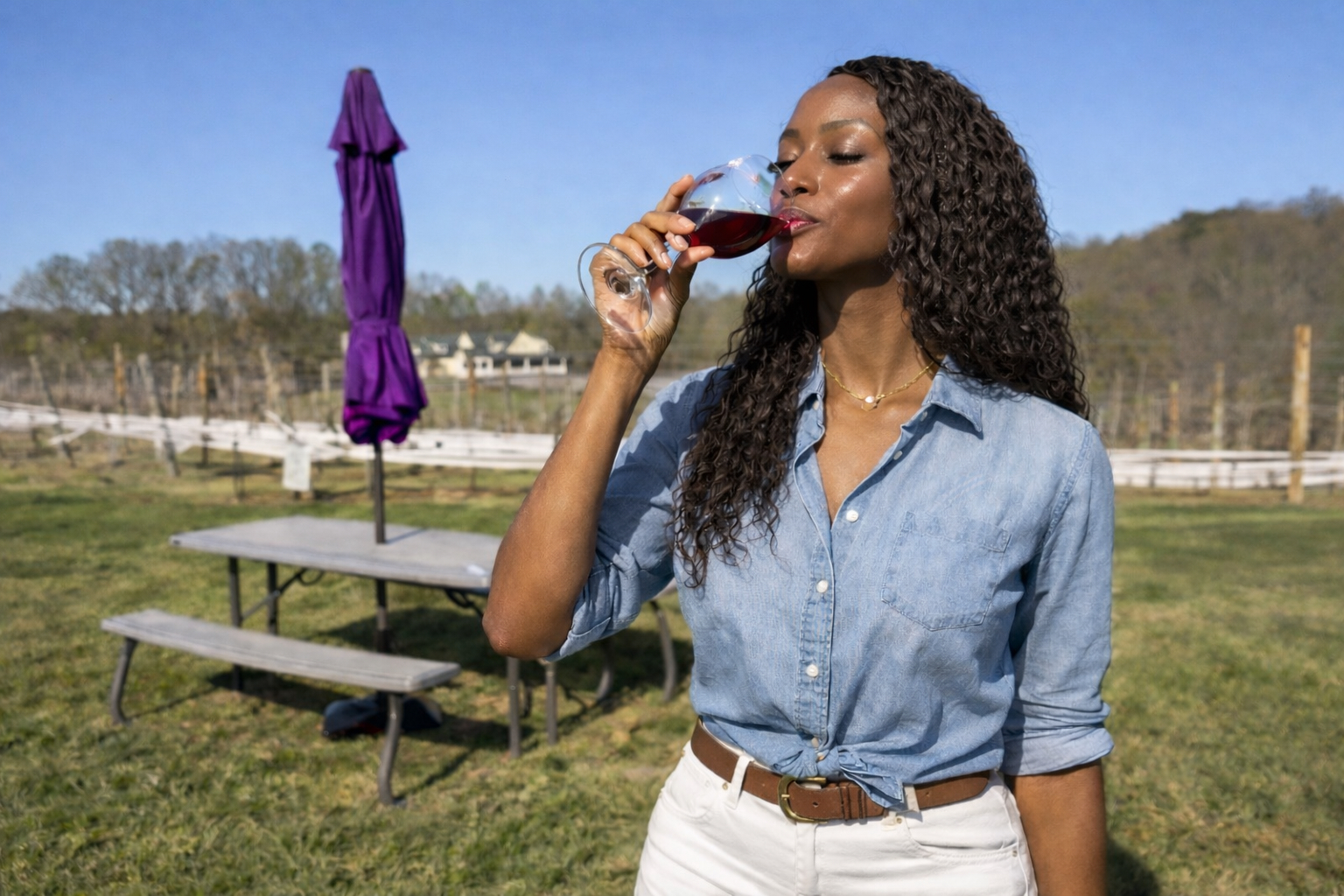
In my Sippin’ w/ Shedaun visit to Magnolia Vineyards, I explored a variety of wines, asked questions, enjoyed the scenery, and simply allowed myself to experience the tasting without overthinking it.
Pair the Wine with the Moment
Beyond food pairings, think about life pairings.
Wine has a way of making ordinary moments feel a little more intentional. A crisp white on the porch while the sun goes down. A glass of red on a slow Friday night with a charcuterie board and good music. Sparkling wine on a girls’ trip to a winery in the mountains.
It’s not really about the wine. It’s about what the wine is part of. The cozy evenings. The quiet weekends. The conversations that stretch past midnight. The views you don’t want to leave.
When you start thinking about wine that way, the pressure disappears entirely. It becomes less about what you know and more about what you feel.
The Best Wine Is the One You Actually Enjoy
Here’s what I want you to take away from all of this:
Wine tasting isn’t about impressing anyone. It’s not about knowing the right vocabulary or having the most sophisticated palate. It’s about finding what you love and giving yourself permission to enjoy it fully, without apology, without pretense, without the need to perform expertise you never claimed to have.
The best wine is the one in your glass right now, in a moment worth slowing down for.
So go visit that winery. Ask all the questions. Order the sweet wine if that’s what you want. Sit outside. Stay longer than you planned.
That’s what tasting is really for.
Continue the Experience
Whether you’re planning your first winery visit or creating cozy moments at home, explore more from The Sip Edit:
Join the Sippin' List for winery inspiration, curated finds, cozy living ideas, and new editions of The Sip Edit delivered straight to your inbox.
Ready to plan your next winery visit? Save this post for later and share it with a friend who needs a little nudge to go.


Comments